
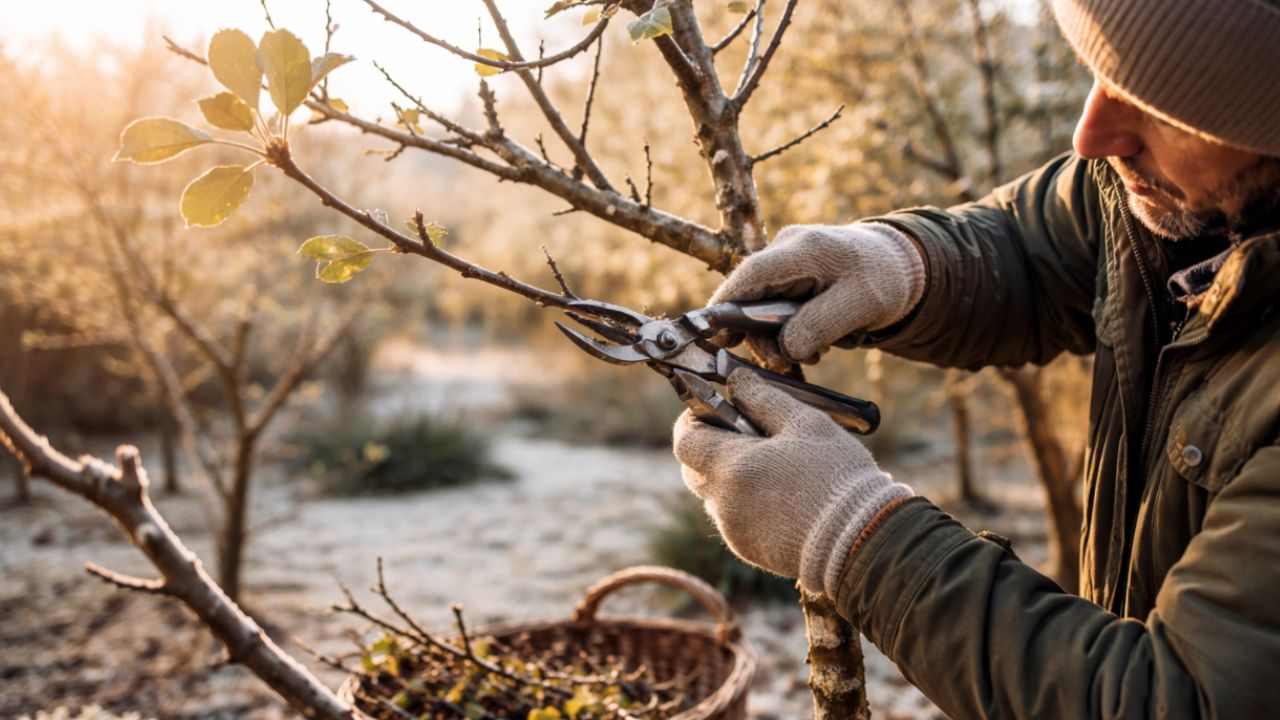
January marks a strategic period for those who care for the garden with attention. During winter, many trees enter dormancy, which reduces stress caused by cutting and promotes faster, more balanced recovery in spring.
+ Feng Shui experts reveal where to place a Peace Lily in 2026
Missing this January pruning window can mean misshapen branches, weak flowering, and even a higher risk of disease.
Below, discover seven trees that particularly benefit from winter pruning and learn how to do it safely, according to guidance from gardening and arboriculture specialists.
1. Apple tree
The apple tree is one of the fruit trees that benefits most from pruning in January. With the canopy “at rest,” it is easier to see crossing, diseased, or unproductive branches.
Proper pruning improves air circulation, increases sunlight exposure, and encourages more uniform fruiting in the next season.
Professional tip: prioritize removing vertical branches and keep an open, vase-shaped structure.
2. Pear tree
Like the apple tree, the pear tree responds very well to winter pruning. Cutting at this time helps control the tree’s size and prevents disorderly growth, which is common when pruning is done out of season.
Important: avoid overly aggressive pruning. Excessive cuts can stimulate weak, low-yield shoots.
3. Plum tree
January is the ideal time to remove old, dry, or poorly positioned branches from the plum tree. Winter pruning reduces the risk of fungal diseases, which tend to spread more easily during warm, humid periods.
Safety tip: use well-sharpened tools to avoid tearing the wood, which facilitates infections.
4. Peach tree
The peach tree requires special attention, and winter pruning is essential to ensure larger, tastier fruit. This practice helps renew productive branches and keep the tree balanced.
Common mistake: leaving too many productive branches. Less is more when it comes to fruit quality.
5. Grapevine
Although many forget it, the grapevine also benefits enormously from pruning in January. Without leaves, it is easier to identify the canes that should be kept for the next harvest.
Technical guidance: preserve the strongest canes from the previous year and remove the weaker or poorly positioned ones.
6. Olive tree
The olive tree is resilient, but responds better when pruning is done during winter. Cutting helps control height, improves canopy ventilation, and stimulates more regular production.
Attention: avoid pruning on days of severe frost. Extreme cold can damage freshly cut tissues.
7. Plane tree
Widely used in urban landscaping, the plane tree tolerates winter pruning well. January is ideal for removing dead branches and keeping the tree safe, especially in areas near homes or sidewalks.
Expert tip: make clean cuts and avoid leaving “stubs,” which can rot over time.
How to prune safely in winter
Regardless of the species, some rules are universal. Always use clean, sharp tools, make cuts on dry days, and observe the tree’s natural structure before starting. If the branch is large or close to power lines, it is best to call a professional.
Winter pruning is not just aesthetic — it is a practice of care, prevention, and planning. By respecting the natural cycle of trees, you ensure a more beautiful, healthy, and productive garden throughout the year.
This content was created with the help of AI and reviewed by the editorial team.
